

Development & Automation
Custom Development & Business Process Automation
Centient1 helps small and mid-sized businesses solve operational and technology challenges that standard applications cannot fully address. We design and develop custom applications, portals, integrations, APIs, and automated workflows tailored to the way each organization operates. Solutions can replace repetitive manual work, connect disconnected systems, extend existing business applications, improve access to information, and create capabilities that are not available through off-the-shelf products alone.
Build What Your Business Actually Needs
Commercial software is often designed around common requirements. That can make it a strong starting point, but many organizations eventually encounter processes, integrations, or customer experiences that do not fit neatly within a standard platform.
Employees may compensate by copying information between systems, maintaining spreadsheets, sending repetitive emails, completing duplicate data entry, or relying on undocumented workarounds. In other situations, a business may need a client-facing application, internal portal, specialized workflow, or unique capability that existing products cannot provide efficiently.
Centient1 helps determine what should be configured, integrated, automated, extended, or custom-built. The result is a practical solution that supports the business without introducing unnecessary complexity.
What We Do
- Custom Business Applications: Design and develop applications tailored to specific workflows, users, and operational requirements. Custom applications can support internal teams, clients, partners, or other stakeholders. They may provide forms, task management, approvals, search, reporting, document generation, data management, scheduling, case management, or other capabilities shaped around the organization’s needs. Depending on the requirement, the solution may be delivered as a web application, mobile-responsive application, low-code application, platform extension, or another appropriate interface.
- Client, Employee, and Partner Portals: Create secure portals that give users access to relevant information, documents, forms, requests, tasks, status updates, and services. Portals can reduce email-based processes and provide a consistent experience for interactions that otherwise occur across disconnected systems. Access can be structured around user roles so different audiences see the information and capabilities appropriate to them.
- Business Process Automation: Automate repetitive, rules-based, and document-driven work across employees, departments, and applications. The objective is not simply to automate individual tasks. We examine the surrounding process so automation reduces friction rather than accelerating an inefficient or poorly designed workflow.
- Application Integration and APIs: Connect business applications so information can move reliably between CRM, ERP, finance, project management, document management, productivity, customer-facing, and industry-specific systems. Integrations can reduce duplicate data entry, improve information consistency, trigger activities across platforms, and give employees a more complete view of the work they manage. Where supported connectors are insufficient, Centient1 can develop custom APIs, middleware, synchronization processes, and integration services appropriate to the requirement.
- Platform Extensions: Extend commercial platforms when standard configuration does not provide the required capability. An extension may introduce a custom interface, specialized business logic, automated process, integration, reporting experience, or user-facing function while preserving the value of the underlying platform. This can be more practical than replacing an otherwise suitable application or building an entirely separate system.
- Document and Content Automation: Improve processes involving forms, reports, proposals, contracts, correspondence, financial records, applications, and other business documents. Solutions may collect information, generate documents, extract or classify content, apply templates, coordinate reviews, route files, compare versions, or transfer information between documents and business systems. Where appropriate, deterministic automation can be combined with AI-assisted document processing, validation, summarization, or review.
- AI-Assisted Automation: Incorporate artificial intelligence into workflows that require interpretation, classification, summarization, generation, recommendation, or preliminary review. AI may help analyze incoming information, draft content, identify missing items, categorize requests, compare documents, recommend next steps, or identify exceptions. Conventional automation can then route work, create records, update systems, request approval, or trigger other actions. Human review can remain part of the process wherever professional judgment, quality control, accountability, or risk requires it.
- Data and Reporting Components: Build the data structures, event tracking, operational reporting, and monitoring needed to understand how an application or automated process is performing. This can help organizations measure throughput, exceptions, completion times, usage, outcomes, and other operational indicators. It also creates a stronger foundation for future analytics and AI initiatives.
- Solution Support and Continuous Improvement: Provide ongoing help with troubleshooting, monitoring, enhancements, integrations, user feedback, documentation, and evolving requirements. Custom solutions and automations rarely remain static. Business processes change, connected applications are updated, volumes grow, and new opportunities emerge. Centient1 can provide flexible ongoing support without requiring the client to maintain every specialized skill internally.
When Custom Development or Automation Can Help
Development or automation may be appropriate when:
- Employees repeatedly transfer information between applications.
- A critical process depends on spreadsheets, email, or manual tracking.
- An existing platform addresses most, but not all, of the requirement.
- A business needs a secure client, employee, or partner portal.
- Available commercial products include excessive functionality or cost.
- Several applications need to participate in one end-to-end process.
- Employees recreate similar documents, reports, or communications.
- A workflow requires complex approvals, routing, or exception handling.
- A customer-facing capability could create a better service experience.
- A legacy application needs to exchange information with newer systems.
- A manual process limits growth or requires additional headcount as volume increases.
- AI could assist with part of a workflow but must also connect with existing applications and business controls.
- The organization has a unique requirement that creates operational or competitive value.

Our Approach

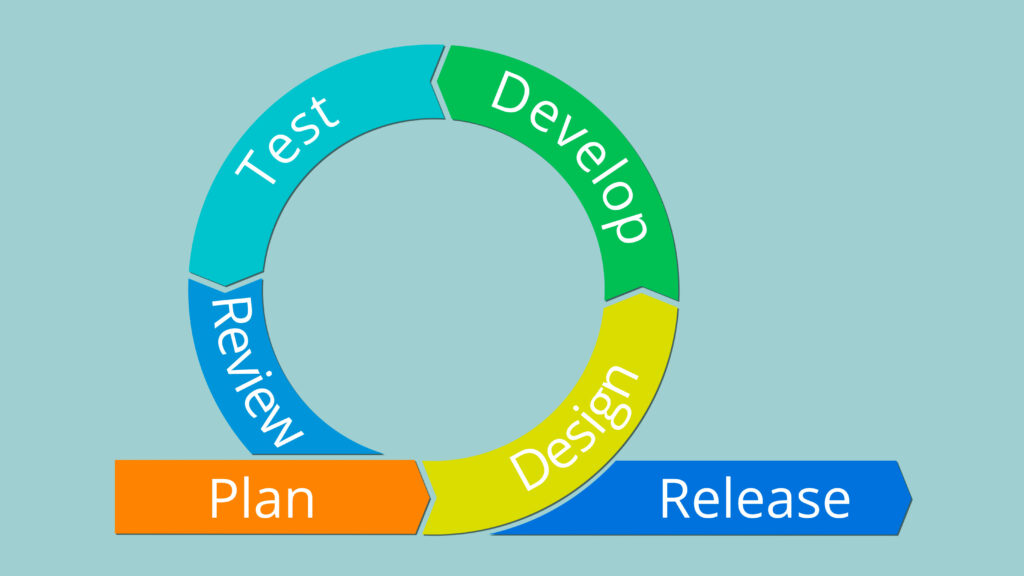
Understand the Business Need — We begin by clarifying the desired outcome, affected users, current process, applications, information, constraints, exceptions, risks, and measures of success. Where requirements are not yet mature, Centient1’s business analysis capabilities can help define the process and determine the appropriate solution before development begins.
Design the Solution — We map the future workflow, define functional and technical requirements, identify system interactions, and determine what should be configured, integrated, automated, or custom-built. The design considers usability, security, information access, maintainability, operational ownership, and how the solution will fit within the client’s broader technology environment.
Begin with a Focused Phase — Where practical, we structure the work around a focused initial release, pilot, or proof of concept. This allows the client to validate the process, user experience, technical approach, and expected value before expanding the solution. It also creates opportunities to incorporate user feedback while the investment remains manageable.
Build and Integrate — We develop the required application, integration, or automation and connect it with the relevant business systems and information sources. Implementation is completed incrementally so requirements, usability, and results can be reviewed throughout delivery rather than only after the entire solution has been built.
Test and Validate — We test expected workflows, business rules, integrations, permissions, errors, and exceptions against the defined requirements. For AI-assisted components, validation should also consider output quality, handling of uncertain results, human review requirements, and the appropriate response when the AI cannot reliably complete a task.
Deploy and Enable — We support deployment, documentation, training, access configuration, and transition into regular use. The objective is not merely to release working technology. It is to help the organization adopt, manage, and support the solution effectively.
Operate and Improve — We monitor results, resolve issues, collect feedback, and introduce improvements as requirements and connected systems evolve.
Secure and Maintainable by Design
Custom solutions should not become fragile systems that only the original developer understands.
Centient1 considers access, permissions, sensitive information, error handling, logging, documentation, operational ownership, and long-term support as part of solution design. The level of control is scaled to the nature of the application, the information involved, and the client’s requirements.
We also seek to avoid unnecessary technical complexity. A solution should be sophisticated enough to address the problem, but understandable and maintainable enough to remain useful over time.
Platform-Agnostic Development
Centient1 is not limited to a single development platform, automation product, or application ecosystem.
We select an approach based on the client’s existing technology, requirements, integration needs, budget, security considerations, internal capabilities, and long-term maintainability. The appropriate solution may use low-code technology, cloud services, custom code, existing platform capabilities, APIs, AI services, or a combination of approaches.
Our role is to choose a practical architecture for the business problem rather than force every requirement into the same technical model.
Flexible Engagements for SMBs
A development or automation engagement can begin with:
- A specific manual process
- A disconnected application workflow
- A portal or custom application concept
- An integration requirement
- A document automation need
- An existing solution that needs improvement
- A focused proof of concept
- A technical architecture or feasibility assessment
- A defined backlog of enhancements
- An ongoing need for development and automation support